PEPTIDE OEM BUYER GUIDE
Private Label Peptide Skincare Claims and Labels: US and EU Review
Plan cosmetic claim evidence, ingredient declarations, artwork review, and responsible-party handoffs for private-label peptide skincare.
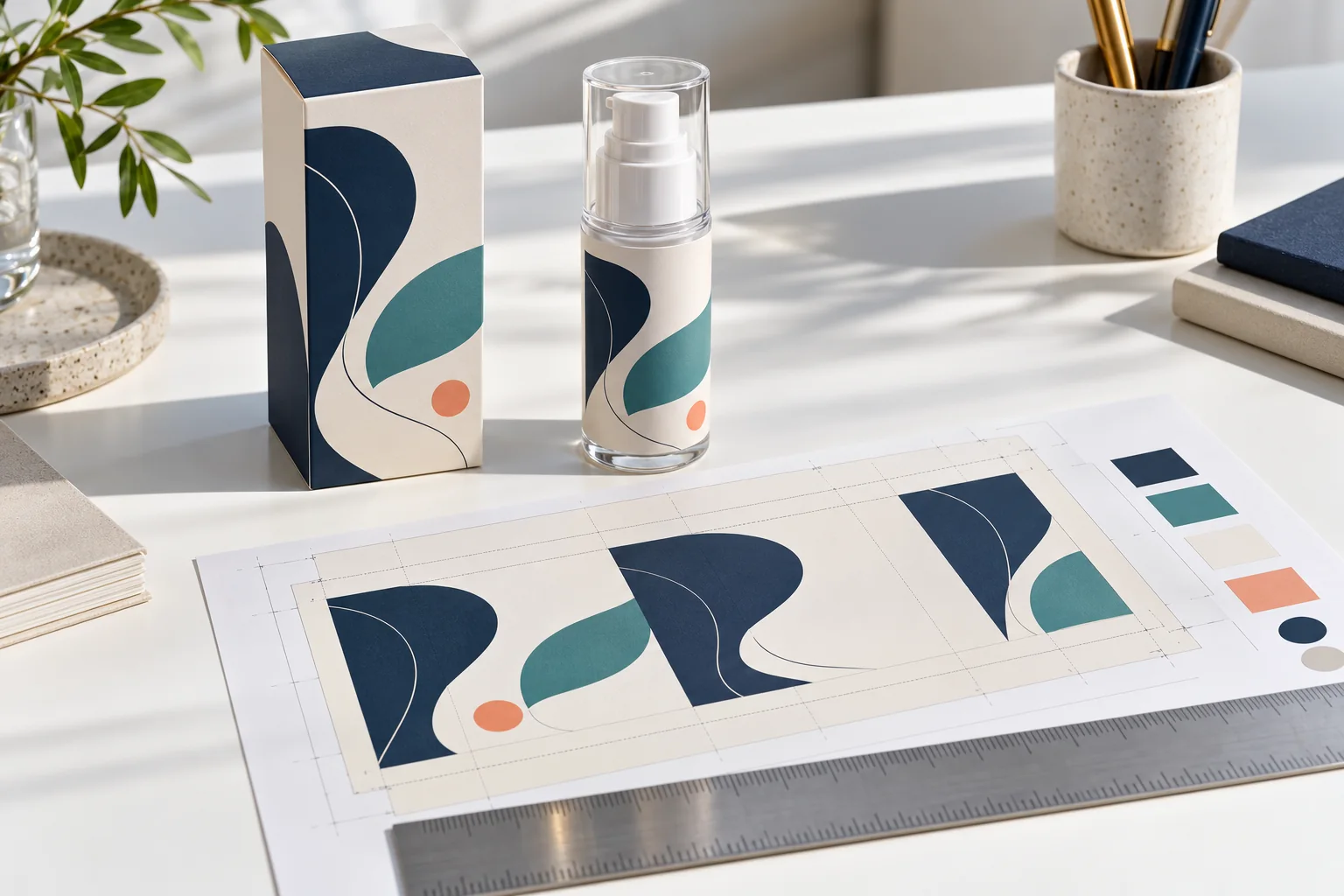
Direct answer: Review a private-label peptide cosmetic as a finished product for a named market. The peptide name, a supplier COA, and attractive carton artwork do not by themselves substantiate a skin-benefit claim or complete a compliant label. Freeze final wording only after the formula, evidence, packaging, and responsible-party roles are clear.
Define cosmetic scope before writing the front panel
Product classification follows intended use and claims, not the presence of the word “peptide.” A topical skincare product promoted for appearance can be evaluated as a cosmetic, but wording that promises disease treatment or an effect on body structure or function may trigger drug requirements in the United States. FDA explains this boundary in Is It a Cosmetic, a Drug, or Both?. Before copywriting, create a one-page brief with the product form, application area, target customer, sales countries, intended claim set, and supporting evidence owner. Keep oral films, oral pouches, injection pens, and any research-only materials outside a topical cosmetic label workflow until their own classification and market route are established.
Connect each claim to finished-product evidence
For every proposed phrase, document what a consumer would reasonably understand and what evidence actually supports that meaning. “Contains a peptide” is an ingredient statement that still needs accurate composition and naming; “visibly improves the look of skin” is a product-benefit statement that needs appropriate support for the finished formula. The EU’s common criteria for cosmetic claims cover truthfulness, evidential support, honesty, fairness, and informed decision-making. They specifically caution against transferring an ingredient property to a finished product without evidence. FDA likewise says US cosmetic claims must be truthful and not misleading. Maintain a claim register that records the exact wording, placement, evidence file, reviewer, market, and decision status.
A useful claim register contains
- Exact on-pack and online wording, including imagery that implies a result.
- Intended country or region and the product classification being assessed.
- Evidence for the finished product, or a clear reason a limited ingredient statement is acceptable.
- Approval owner, revision date, and the artwork version where the claim appears.
Build the label from the destination-market requirements
A bilingual artwork file is not a substitute for a market-specific label review. In the United States, FDA’s summary of cosmetic labeling requirements covers the product identity, net quantity, ingredient declaration, and other required information, with rules for placement and presentation. In the EU, Regulation (EC) No 1223/2009 addresses responsible-person obligations, the product information file, and labeling. These frameworks differ, so the same carton may need different text, language, and responsible-party information. Use the correct ingredient names and check the final INCI list against the approved formula, including carriers in purchased peptide blends. Treat CosIng as a reference tool rather than legal authorization for an ingredient.
Assign evidence and release responsibilities in the OEM brief
The ingredient supplier, formulator, filler, packaging vendor, and brand may each hold part of the evidence. Put the handoffs in writing: who supplies raw-material documents, who owns the final formula and safety assessment, who approves artwork, who controls lot coding, and who retains the records for the saleable SKU. FDA’s MoCRA overview describes the responsible person’s duty to maintain records supporting adequate safety substantiation for US cosmetic products. A sourcing conversation can begin with PeptidesOEM’s private-label, quality, and contact pages; project-specific legal obligations and final claim approval should be confirmed by the relevant market specialist.
FAQ: cosmetic peptide claims and labels
Does an INCI entry mean a peptide cosmetic is approved in the EU?
No. The European Commission says CosIng is informative and has no legal value by itself. Ingredient restrictions and a finished-product safety assessment still matter.
Can an ingredient study substantiate a finished-serum claim?
It may contribute context, but it does not automatically prove the same effect in the final formula. Assess the exact claim against evidence relevant to the finished product.
Who signs off private-label artwork?
The contract should name an approval owner. The brand and applicable responsible person need a qualified market-specific review before print release, using the final formula and packaging specification.
Primary references
- FDA: Is it a cosmetic, a drug, or both?
- European Commission: Common criteria for cosmetic claims
- FDA: Summary of cosmetics labeling requirements
- EU: Regulation (EC) No 1223/2009 on cosmetic products
- FDA: Modernization of Cosmetics Regulation Act of 2022
- European Commission: Cosmetic ingredient database