PEPTIDE OEM BUYER GUIDE
Dissolving Microneedle Patch OEM: Testing, Packaging and Claim Boundaries
A procurement checklist for patch geometry, mechanical integrity, moisture protection and finished-product evidence before approving a dissolving microneedle project.
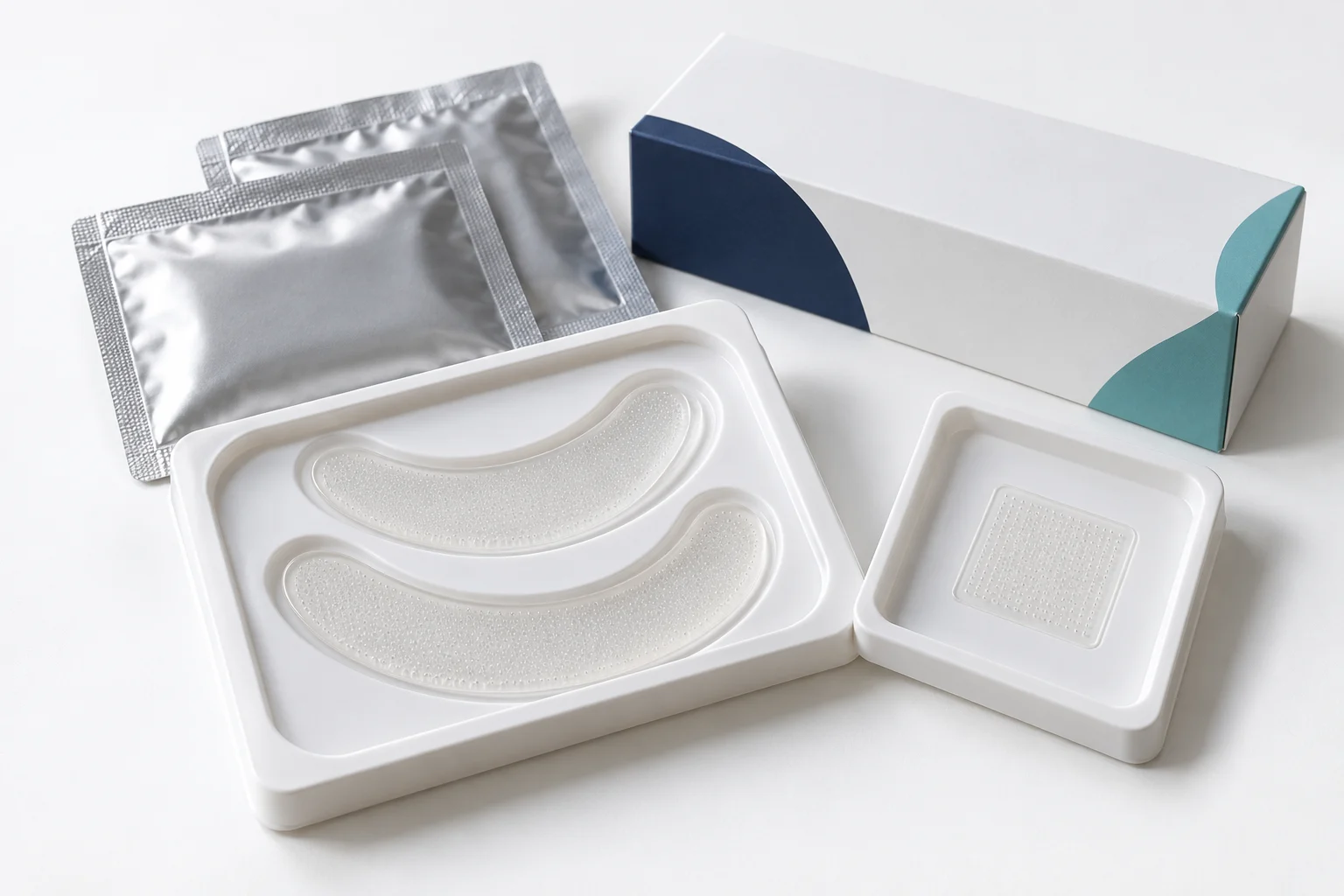
Approve a dissolving microneedle patch against evidence for its geometry, mechanical behavior, formulation and final pack. A macro photograph cannot demonstrate insertion, dissolution in use or peptide delivery. Before ordering tooling, identify the intended claims and obtain a destination-market classification assessment for the exact design.
Separate the patch description from the regulatory decision
A product name such as “cosmetic microdart patch” does not settle its legal classification. Intended purpose and physical action matter. FDA’s 2020 microneedling guidance explains how it considers whether a microneedling product meets the medical-device definition. Review the actual design and claims instead of inferring status from another brand’s packaging.
FDA also states on its microneedling devices page that such devices are not approved for delivery of cosmetics or other listed products into skin. This is not a universal classification decision for every dissolving patch, but it is a reason to avoid implying that clearance for a different device authorizes a peptide-delivery claim.
Write the intended use before the test list
Identify the application area, contact duration, intended user and proposed benefit. The required evidence depends on those choices. The technical brief should also state what the product will not claim. Keep the approved wording accessible to formulation, packaging and sales staff so later artwork does not expand the claim silently.
Inspect dimensions and mechanical behavior separately
Request a controlled drawing for the patch footprint and array. Needle count, height and shape are distinct characteristics; none alone proves performance. Measurements need an identified instrument or method and a sampling plan. A microscope image should show a scale and identify the sample, rather than serve as an unlabeled marketing close-up.
Ask how the developer evaluates mechanical integrity and what failure looks like under the selected conditions. A test on a model substrate is evidence about that model. It does not automatically establish performance or tolerability on people. The report should state its limitations and distinguish measured results from the next study proposed.
- Geometry: drawing revision, measured dimensions and array completeness.
- Mechanical integrity: test conditions, observed failures and acceptance rationale.
- Formulation: identity, content and distribution of the relevant ingredient.
- Dissolution behavior: medium, conditions, endpoint and residual material.
- Adhesion and removal: method appropriate to the proposed use.
- Safety assessment: materials, contact conditions and required supporting studies.
Match dissolution claims to the test
A water-dissolution demonstration is easy to film, but its conditions differ from use on skin. Ask which part of the patch dissolves, what remains and how the endpoint is defined. Do not use a video as evidence of a delivered peptide amount. If content is measured before and after testing, request the recovery method and an explanation of unaccounted material.
For early prototypes, record exploratory observations without turning them into universal performance specifications. A statement such as “sample A met the agreed bench endpoint under method B” preserves useful information. A claim of complete or deep delivery requires a different evidence package and a market-specific review.
Protect the array through the finished supply chain
The tray, liner and pouch should protect the functional surface without placing pressure on it. Review the packed sample, not only a loose patch supplied for photography. Include removal from the tray in the handling check and photograph any damage with a lot reference. Ask whether the pack configuration tested is the one proposed for production.
Moisture protection deserves a defined assessment because the product is designed to dissolve under selected conditions. Specify the pouch material, seal area and approved sealing process. If a desiccant is proposed, document its selection and safe separation from the product; do not assume adding one compensates for an unsuitable pack. Repeat relevant checks after the agreed storage and shipment simulation.
Approve a controlled sample set
Retain samples from the approved revision and sign off the drawing, formulation and packaging together. Keep rejected examples when they help define a defect. Ask the supplier to notify you before changing the mold, patch material, adhesive or pouch. Record who decides whether additional testing is needed.
The microneedle patch OEM page is the starting point for a format inquiry. Use Quality to frame documentation questions and the production handoff guide to track approvals. Published concept images show packaging possibilities; they are not evidence of needle dimensions, clinical benefit or regulatory authorization.
FAQ: buyer questions
Does a higher needle count mean better peptide delivery?
No. Needle count describes geometry. Delivery requires evidence for the complete formulation, array, application conditions and intended claim.
Can a water-dissolution video prove the patch works on skin?
No. The video demonstrates behavior under its own conditions. Skin-use performance and any delivered-content claim require relevant methods and supporting evidence.
Is a cosmetic patch automatically outside medical-device regulation?
No. The product's intended purpose, physical action, claims and market must be assessed. A cosmetic description on packaging does not by itself determine classification.
References and scope
Source check: 31 October 2026. The checklists are editorial procurement recommendations, not company test results. Regulatory sources apply only within their stated scope; confirm current requirements with a qualified reviewer for the intended market.