PEPTIDE OEM BUYER GUIDE
Peptide Skincare OEM Packaging: Serum, Ampoule, and Cream Formats
Compare saleable skincare formats, container compatibility, pack components, and claim review before committing to bulk production.
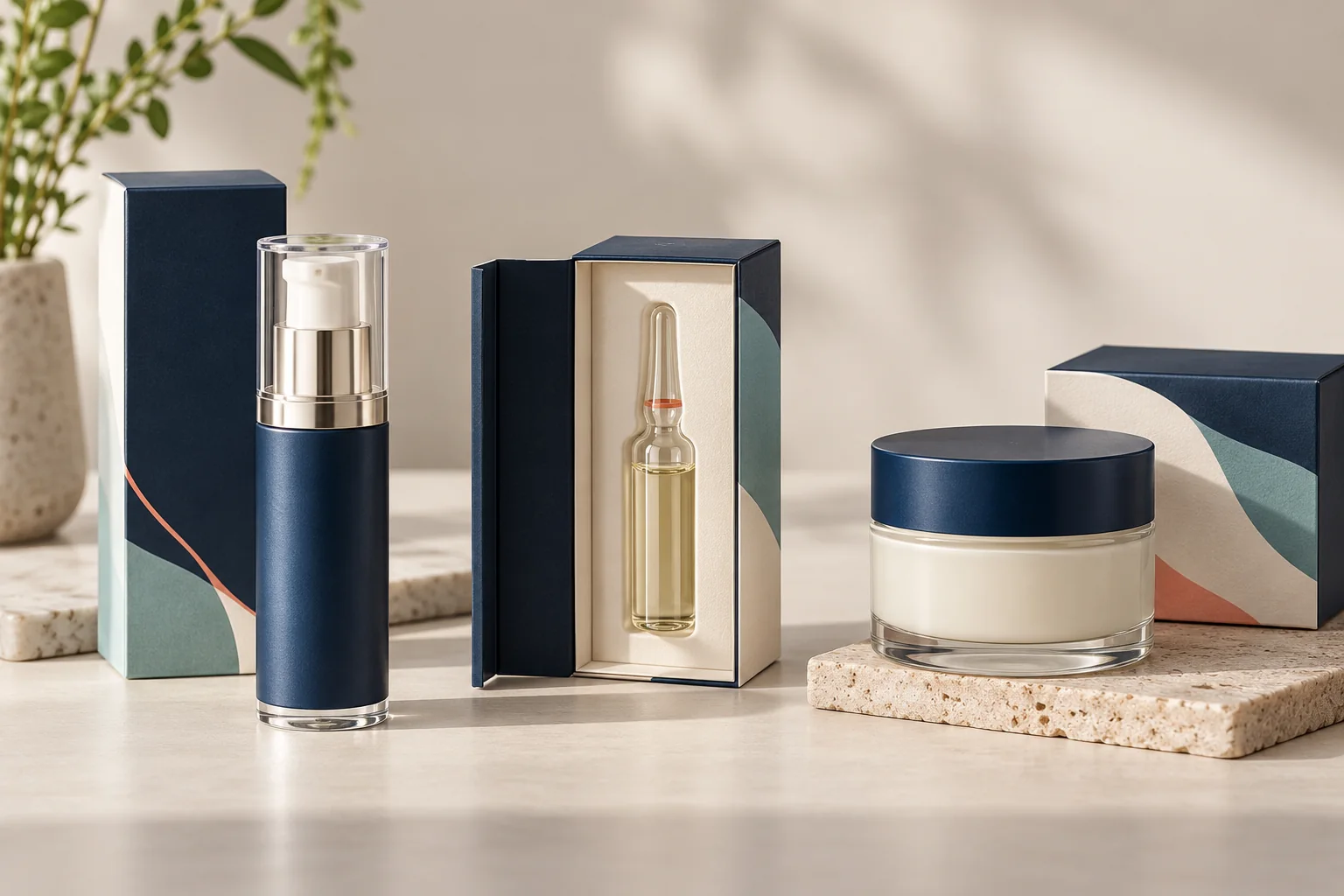
Direct answer: Choose the package for a peptide skincare product together with its formula and use case. An airless serum bottle, single-use ampoule, and cream jar create different consumer experiences and different questions for filling, stability, protection, labeling, and cost. A polished pack is not a substitute for testing the finished product in its intended container.
Match the product format to the buyer’s brief
Start with how the customer will use the product, not the shape of a reference photo. A daily serum can prioritize controlled dispensing and a routine-friendly pack. An ampoule can support a concentrated, measured-use presentation, while a cream may fit a richer texture and a different shelf display. These are commercial design choices, not evidence that one form is inherently more effective. In a peptide OEM brief, record target texture, intended cosmetic positioning, fill size, number of units per retail pack, expected user frequency, and target market. The Peptide Skincare OEM and copper peptide serum pages show how the format discussion connects to ingredient and formula decisions.
Three packaging routes to compare
- Airless serum: check dispenser output, label area, compatibility, and residual product left after use.
- Ampoule set: check unit handling, secondary protection, set count, and instructions for intended use.
- Cream pack: compare jar and pump options against texture, consumer contact, and presentation.
Test the formula in the proposed container
Container material, closure, headspace, light exposure, and dispensing can affect what a consumer receives over the life of a product. A packaging change therefore belongs in the development review, especially when a brand switches from a sample bottle to a production component. FDA’s cosmetic product-testing guidance emphasizes responsibility for finished-product safety under expected use and discusses contamination introduced during use. The FDA GMP inspection checklist also addresses raw materials, primary packaging, finished-product controls, and batch records. For a specific project, agree on the stability and compatibility assessment with the formulator and responsible brand team before artwork or bulk packaging is committed.
Specify the saleable unit, not just the bottle
Procurement comparisons often fail because two quotations cover different scopes. One may include only a filled primary container; another may include a decorated bottle, carton, leaflet, tamper feature, shipper, and assembled retail unit. Create one bill of materials for the saleable SKU and ask each supplier to quote against it. Include component artwork responsibility, master sample approval, barcode ownership, language variants, and how batch codes will be applied and read. The packaging overview and private-label program are useful internal starting points. Record which elements are stock, custom-decorated, or newly tooled; those choices influence practical lead time and order quantity without implying a universal MOQ.
Details that prevent a late packaging revision
- Primary container and closure specification, including an approved physical sample.
- Fill quantity, retail unit count, outer carton dimensions, and required languages.
- Who supplies print-ready artwork, checks proofs, and approves the final master pack.
- Lot-code location, traceability handoff, and shipping configuration.
Keep claims and labels tied to the finished product
Ingredient stories are useful for product positioning, but they do not automatically support a finished serum or cream claim. In the EU, Regulation (EU) No 655/2013 requires cosmetic claims to be truthful and supported by adequate, verifiable evidence; it also cautions against implying that an ingredient’s properties necessarily belong to the finished product. In the US, FDA explains that cosmetic labels must be truthful and that therapeutic or structure/function claims can change the product’s regulatory status. Packaging design should leave room for the correct ingredient declaration, net contents, business details, directions, and warnings required for the destination market. Final artwork approval belongs with the brand’s qualified regulatory reviewer.
FAQ: peptide skincare packaging
Is an airless bottle required for every peptide serum?
No. It is one packaging option. Select a container after reviewing the formula, dispensing experience, protection needs, compatibility evidence, and commercial brief.
Can a sample-pack design be used unchanged for bulk production?
Only after the intended production components and saleable unit have been checked. A sample vessel may differ from the chosen retail pack in material, closure, fill, and consumer use.
Should the carton show the peptide’s laboratory purity?
Do not turn a raw-material test result into an implied finished-product benefit. Any label statement should be relevant, accurate, substantiated, and reviewed for the destination market.